

Your Husband Is Deployed to War in Middle East or Iran: How Military Spouses Cope with Anxiety, Loneliness, and Disconnection
"In Our 14 Years Together, He's Never Been More Supportive Than He Is Now": How Military and First Responder Couples Stay Connected Through Deployment
Before we dive in: grab my free 3 Keys to Knowing He’s Got Your Back training so you can feel supported, calm, and deeply connected before, during, and after deployment.
"In our 14 years together, he's never been more supportive than he is now." That is what my client, a firefighter and active duty military wife, told me after she and her husband learned how to communicate and reconnect while facing a military deployment countdown. When they first came to me, she felt like her husband didn't choose her and like she was carrying everything alone, while her husband felt like he wasn't good at communication and was quietly holding the countdown to deployment in the back of his head.
Whether you are a military, fire, or police spouse navigating deployment, long training rotations, or back-to-back shifts, learning my Assertive Trauma Informed Communication method, Gentle Observation, and Consistent Quality Time Together can shift your marriage from resentment and arguments in front of the kids to calm 15-minute check-ins and deep daily support.
You can also listen to my Podcast Episodes 56 and 57, which are mini trainings designed for you, and check out my 3 practical tips for calming pre-deployment anxiety when your husband is deploying. Here is the full story of how this firefighter and military couple transformed their marriage during deployment, and how you can do the same. You may also want to read how to reconnect when your military husband feels emotionally distant before or after deployment and 5 firefighter wife struggles and how fire wives feel like a team again.
From Resentment to Connection: A Real Military Spouse Story
My firefighter + active duty military wife client came to me feeling like her husband didn’t choose her and like she was alone during deployment, which is something many military spouses experience when their husband is deployed to war or overseas.
Now? She says, “In our 14 years together, he’s never been more supportive than he is now” even during the stress of military deployment and uncertainty.
Supportive, strong 1st responder + military relationships is my jam.
Her firefighter + military husband came to me feeling like he wasn’t good at communication and didn’t like “cheesy” things like coaching
…now? He’s opening up in couples coaching sessions like, “They gave us a countdown to deployment. It’s in the back of my head. I just want to spend every waking minute with my family.”
He’s opening up in couples coaching sessions like, “They gave us a countdown to deployment. It’s in the back of my head,” which is a reality many military families face when preparing for deployment to war zones like the Middle East.
Providing a safe space for 1st responders + military is my jam.
In sharing this client story, I share practical tips on how to cope when your husband is deployed to war in the Middle East or Iran.
Military Marriage Communication Problems During Deployment (And What Actually Works)
What changed?
They’ve learned my Assertive Trauma Informed Communication method, a powerful tool for military couples navigating deployment stress, anxiety, and emotional disconnection.
In the wife’s words, “I was resentful before. I was asking for help, but through coaching, I learned that my husband didn’t know what I was asking for. Now, I know just how specific I need to be.”
The couple learned…
The couple learned how to check in with one another and plan serious conversations for a later time if needed when they were both biologically available to listen and chat calmly. This is one of the most important ways to cope when your husband is deployed and communication feels strained.
Now? Instead of arguments in front of the kids, a common struggle in military marriages during deployment, they resolve conflict in brief, easy 15 minute conversations.
How to Stay Connected During Deployment Without More Arguments
What changed?
They developed consistent, quality time together, which is something many military spouses struggle with during deployment due to loneliness, shift work, and emotional distance.
Between deployments, shift work, and being active parents to school age children, they had neglected time together.
In coaching, they began chilling out after their kids went to bed on nights off together + regular date nights to reconnect.
Time together seemed impossible, which is something many military wives feel during deployment, until…
We thought about intentional pockets of time, even if brief, when time together was about the two of them just hanging out.
It didn’t have to be a formal date. Learning how to stay connected during deployment often looks simple, flexible, and realistic.
It didn’t have to be weekly on Friday nights… it could be every other week on his 2nd day off at night after the kids went to bed over Netflix in bed.
Why Military Spouses Feel Alone During Deployment (Even with a Supportive Husband)
What changed?
They came to each coaching session ready to work on themselves and their relationship despite the mental load, stress, and overwhelm that military spouses often carry during deployment.
The wife said, “We wouldn’t have had these conversations without being led through them during coaching.”
They felt seen, which is something many military spouses deeply crave when they feel alone, overwhelmed, or unsupported during deployment.
The couple also practiced daily gratitude inside my free 3 Keys to Knowing He’s Got Your Back training, which helps reduce anxiety, overthinking, and resentment that often build up during military deployment. The wife said, “He noticed things that I didn’t realize he did. It made me feel good.”
But, even after that initial practice, in each coaching session, I see the husband open up to his wife time and again about how he feels… and show her just how he could be there for her in their daily life.
Their relationship has transformed proving that even during deployment, military marriages can shift from disconnection and resentment to deep support and connection.
They’re continuing coaching now + are already making post-deployment coaching plans too.
This transformation is 100% possible for you too even if your husband is deployed, communication feels hard, or you’re struggling with anxiety, loneliness, or resentment in your military marriage.
Don’t forget to listen to my podcast episodes 56 & 57 that are mini trainings were made for you.
Frequently Asked Questions About Military Marriage During Deployment
How do you stay connected to your husband during deployment without arguing?
Focus on brief, intentional check-ins when you are both biologically available to listen rather than forcing heavy conversations when one of you is exhausted. Using Assertive Trauma Informed Communication and Gentle Observation, which you can learn inside my On the Same Team program, helps you resolve conflict in calm 15-minute conversations instead of letting resentment build up.
Why do military spouses feel so lonely and resentful before and during deployment?
Between the deployment countdown, solo parenting, and carrying the mental load at home, it is easy to feel like your husband is not choosing you or noticing what you do. Ask for help specifically using the communication strategies I teach in On the Same Team so he knows how to show up for you, and practice daily gratitude so you both notice each other's efforts.
What counts as quality time together when you are preparing for deployment with kids?
Quality time does not have to be a formal Friday night date out of the house. Intentional pockets of Consistent Quality Time Together, like hanging out in bed watching a show after the kids go to sleep, build deep connection before he leaves and after he returns.
In my military wife client’s words:
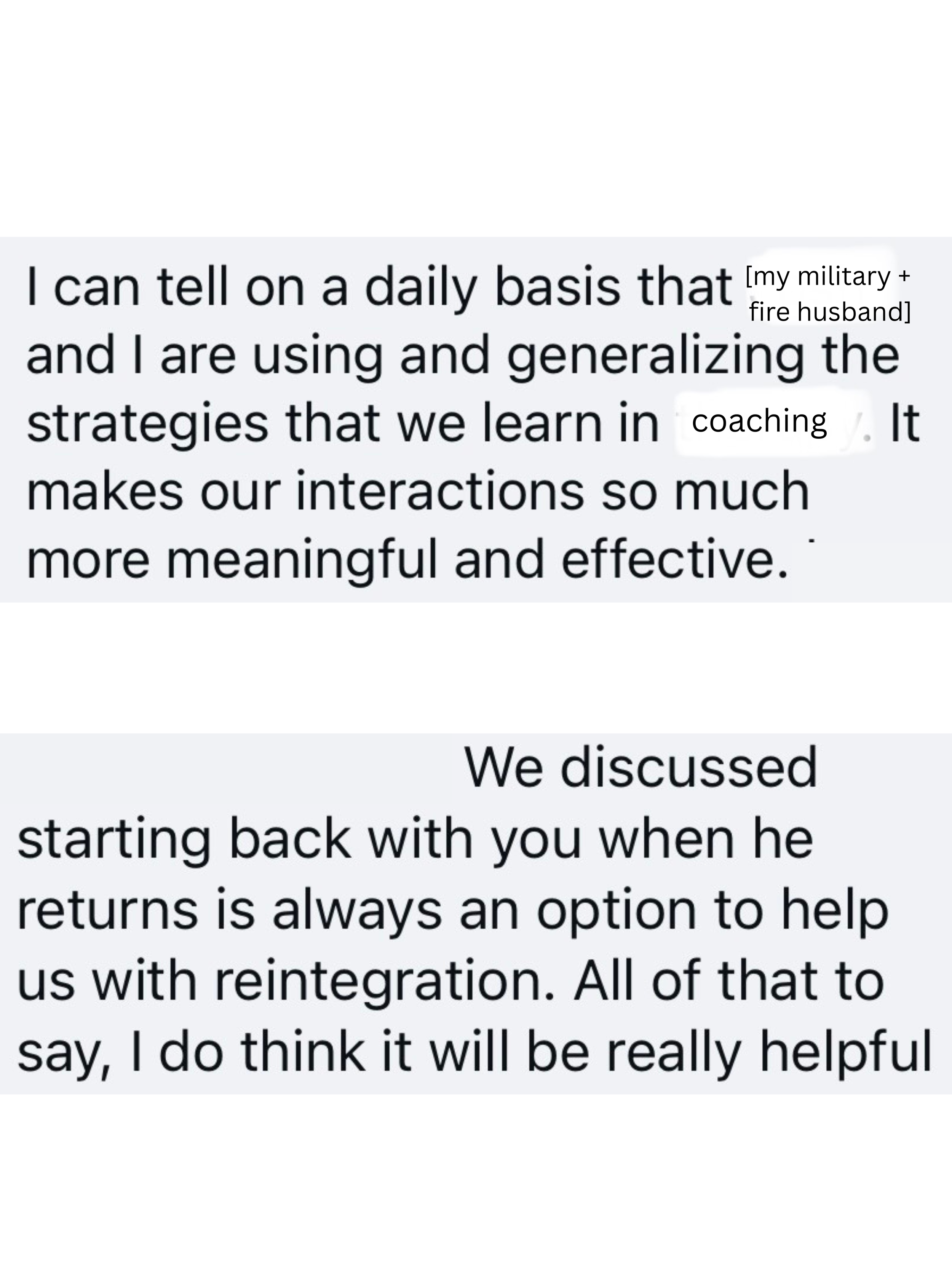
Picture this:
Instead of arguments in front of the kids or silent resentment before deployment, you resolve conflict in calm, easy 15-minute conversations using Assertive Trauma Informed Communication.
You use Gentle Observation to check in when you are both biologically available to listen, and he opens up honestly about what is on his mind.
You ask for help specifically so he knows exactly how to support you, and he notices the things you do every day.
You protect Consistent Quality Time Together before he leaves and during his time home, even if it is simply hanging out over Netflix in bed after the kids are asleep.
Your Independent Daily Routines and gratitude practice keep you grounded so you feel like an unshakable police, fire, or military team before, during, and after deployment.
Ready to shift from deployment anxiety and resentment to deep support and connection? Start with my free 3 Keys to Knowing He’s Got Your Back training.